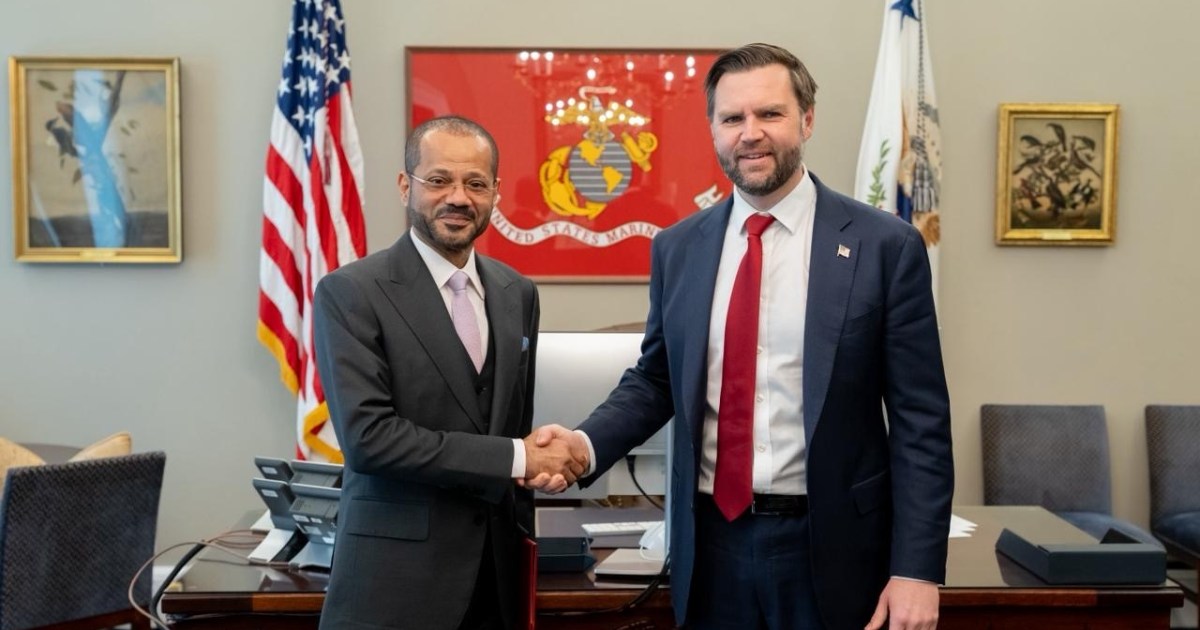
Navigating the Precipice: JD Vance on US-Iran Paths Amid Nuclear Standoff
The intricate dance between diplomacy and potential military action has long defined the United States' approach to complex geopolitical challenges. In the shadow of escalating tensions surrounding Iran's nuclear ambitions, US Vice President JD Vance has articulated a nuanced, yet firm, perspective on the country's strategic calculus in the region. His recent pronouncements have sought to allay fears of an open-ended conflict, even as the administration weighs formidable options to prevent Tehran from developing nuclear weapons. The crucial question at the heart of the current US-Iran nuclear standoff remains: can the United States achieve its objectives without falling into a protracted engagement, a concern often invoked when discussing a potential vance middle east war scenario?
Vance’s statements underscore a critical shift in how Washington might view interventions, moving away from the specter of endless entanglement that has characterized previous operations in the region. As indirect talks between the US and Iranian delegations continue in Geneva, mediated by Oman, the world watches closely for signs of a breakthrough – or a dangerous escalation. This article delves into Vance’s outlook, examining the twin tracks of diplomacy and military deterrence, and exploring the broader implications for regional stability.
JD Vance’s Stance: No Protracted Conflict in the Middle East
In a significant interview with the Washington Post, Vice President JD Vance expressed strong conviction that any potential military action against Iran would not drag the United States into a years-long, protracted war in the Middle East. This assertion directly challenges the historical narrative of US involvement in the region, which has often seen engagements extend far beyond initial projections. Vance emphatically stated, "The idea that we're going to be in a Middle Eastern war for years with no end in sight - there is no chance that will happen."
This confidence stems from a belief in the ability to conduct "very clearly defined" military operations. Vance cited two specific examples: last year's limited US strikes on Iranian nuclear facilities and a recent military operation in Venezuela. These examples, he suggested, demonstrate a new strategic playbook where military force can be applied with precision and limited scope, achieving specific objectives without spiraling into broader regional conflicts. The underlying philosophy appears to be one of targeted deterrence and enforcement, rather than comprehensive nation-building or regime change.
For policymakers and military strategists, this approach implies a focus on kinetic actions designed to degrade specific capabilities or enforce red lines, rather than embarking on open-ended campaigns. The potential benefits include minimizing troop exposure, reducing financial costs, and avoiding the complex political quagmires associated with long-term occupations. However, critics often point to the unpredictable nature of conflict, especially in a volatile region like the Middle East, where even limited actions can trigger unforeseen retaliations and broader destabilization. Vance's perspective, however, indicates a firm belief that these risks can be managed through careful planning and clear objectives, reinforcing the idea that a prolonged vance middle east war is not an inevitability.
The Diplomatic Front: Navigating the Nuclear Impasse
While military options remain on the table, the diplomatic path is being actively pursued, albeit through indirect channels. Representatives from the United States and Iran have engaged in multiple rounds of indirect talks in Geneva, with Oman's foreign minister playing a crucial mediating role. These negotiations primarily center on Iran's contested nuclear program, with the US unequivocally aiming to prevent Tehran from developing nuclear weapons.
Iran, for its part, consistently denies any intention to build nuclear weapons. However, it has expressed willingness to limit aspects of its nuclear program in exchange for relief from the tough US economic sanctions that have crippled its economy. Beyond sanctions relief, Iran's leadership is also keen to avert the risk of war, especially given Washington's dramatically increased military presence in the region and President Trump's repeated suggestions of striking Iran if a deal isn't reached. On Wednesday, Iran took a tangible step, submitting an initial draft of a proposed agreement, signaling its commitment to finding a negotiated solution.
The complexities of these negotiations are immense. Building trust between two adversaries with a long history of animosity is a formidable challenge. Both sides arrive at the table with deeply entrenched positions and a profound sense of grievance. For diplomacy to succeed, several elements are crucial:
- Clear Red Lines: Both parties must understand and respect the other's non-negotiable boundaries.
- Verified Compliance: Any agreement on Iran's nuclear program would require robust and intrusive verification mechanisms to ensure Tehran's adherence.
- Phased Sanctions Relief: The lifting of sanctions would likely need to be gradual, tied to demonstrable Iranian compliance, to maintain leverage.
- Regional De-escalation: Beyond the nuclear file, broader regional security concerns and proxy conflicts often complicate direct bilateral discussions.
The role of mediators like Oman is invaluable in bridging communication gaps and fostering an environment conducive to dialogue when direct communication is politically fraught. Their ability to shuttle proposals and interpret intentions can prevent misunderstandings that might otherwise lead to escalation.
Military Options: A Calibrated Approach to Deterrence
Vance's acknowledgment that President Trump's options range from military strikes "to ensure Iran isn't going to get a nuclear weapon" to a diplomatic solution highlights the dual-track strategy. The administration’s posture of increased military presence in the region, coupled with the President's public rhetoric, serves as a powerful deterrent and signal of resolve. However, the exact nature of potential military action, if diplomacy fails, remains a subject of intense speculation and strategic planning.
If military force were to be employed, Vance's "very clearly defined" actions suggest a strategy focused on surgical strikes aimed at specific targets, such as uranium enrichment facilities, heavy water plants, or missile production sites. The goal would be to degrade Iran's nuclear capabilities, set back its program by years, and communicate a decisive message without initiating a full-scale invasion or prolonged conflict. This approach echoes the concept of "escalation dominance," where one side controls the pace and scope of conflict to achieve objectives without allowing the situation to spiral out of control.
However, implementing such a calibrated approach carries inherent risks. Iran possesses a sophisticated missile arsenal and a network of regional proxies capable of retaliating against US interests or allies. Any military action, no matter how limited, could ignite a wider regional conflict, impacting oil supplies, disrupting global trade, and potentially drawing in other regional actors. This is precisely why Vance's confidence in avoiding an "endless war" is so significant; it reflects an administration's calculated assessment of these risks and a belief in their ability to contain them. As Vance reiterated, the aim is to avoid an outcome often feared in the context of any vance middle east war scenario – one without a clear end in sight. For more on this, consider reading Vance Confident US Can Avoid Endless War with Iran, Citing Defined Actions.
Beyond the Headlines: Understanding Regional Dynamics and Future Outlook
The US-Iran nuclear standoff is not an isolated event; it is deeply interwoven with broader Middle Eastern dynamics. Regional allies of the US, such as Israel and Saudi Arabia, view Iran's nuclear ambitions with grave concern and have their own security imperatives that often influence Washington's foreign policy. Any resolution or escalation in the US-Iran relationship will inevitably send ripples across the entire region, affecting stability, alliances, and power balances.
Looking ahead, the path forward remains precarious. The ongoing indirect talks offer a glimmer of hope, but the gap between US demands for comprehensive nuclear restrictions and Iranian demands for extensive sanctions relief is substantial. Practical tips for navigating this complex landscape include:
- Sustained Diplomatic Pressure: Keeping communication channels open, even if indirect, is vital to prevent miscalculation.
- Leveraging Multilateral Support: Engaging international partners like the P5+1 (China, France, Russia, United Kingdom, United States, plus Germany) can lend legitimacy and broaden the basis for any agreement.
- Clarity on Red Lines: Both publicly and privately, the US must ensure Iran understands the consequences of further nuclear escalation.
- Economic Resilience: For Iran, diversifying its economy and reducing reliance on oil exports could reduce the impact of sanctions and create more flexibility in negotiations.
Ultimately, the success of either the diplomatic or military path hinges on strategic patience, clear communication, and a realistic assessment of the other side's capabilities and intentions. The world watches, hoping that the high-stakes game played between Washington and Tehran can find a peaceful resolution.
Conclusion
Vice President JD Vance’s declarations offer a crucial insight into the Trump administration’s thinking regarding the US-Iran nuclear standoff. His firm belief that the US can navigate this crisis without a protracted vance middle east war outlines a strategic vision that prioritizes limited, defined actions – be they diplomatic or military – over open-ended engagements. While diplomacy, facilitated by mediators like Oman, remains the preferred route to de-escalation and a non-nuclear Iran, the option of calibrated military strikes serves as a powerful deterrent. The coming weeks, with planned further discussions and the review of Iran’s draft agreement, will be pivotal in determining whether this high-stakes tightrope walk can lead to a stable resolution, or if the region will be pushed closer to the brink of conflict.